
Quick Summary
Following a comprehensive garage door maintenance checklist is essential for preventing costly breakdowns, maintaining smooth operation, and eliminating serious entrapment hazards. Superior Garage Door Experts Port Charlotte emphasizes performing safe monthly DIY tasks like track cleaning, lubrication, and auto-reverse testing while leaving high-tension springs and lift cables to trained professionals. Homeowners will gain the knowledge needed to conduct routine safety inspections and identify worn components that require scheduling an annual professional tune-up.
Garage Door Maintenance Checklist: Stop Costly Breakdowns
A simple garage door maintenance checklist can help prevent dangerous mechanical failures and operating issues.
A poorly maintained door poses real physical risks. Records from the Consumer Product Safety Commission (CPSC) in 1990 reported approximately 73 child deaths related to automatic garage doors from March 1982 through publication of the report. Qualifying residential automatic garage door operators manufactured or imported after January 1, 1993, were required to include an external entrapment-protection system. Regular care ensures these vital safety systems function properly.[2]
Essential Garage Door Maintenance: Quick Guide
Essential Garage Door Maintenance in brief: A reliable garage door maintenance routine covers monthly visual inspections of hardware, safe opener disconnection, balance and manual movement checks, photo-eye cleaning and interruption testing, solid-object automatic reversal testing, and lubricating compatible moving parts with a garage-door-appropriate spray lubricant according to the owner’s manual.[3]
Performing basic visual and operational checks monthly, as recommended by Superior Garage Door Experts Port Charlotte, helps catch worn or damaged components before they cause operational failure.
Core Steps of Door Care
- Visual Inspection: Inspect springs, cables, rollers, pulleys, hinges, and mounting hardware for wear or damage.
- Safe Opener Disconnection: Disconnect the opener safely before balance and manual movement testing.
- Balance & Manual Movement: Check door balance and manual operation to ensure smooth movement.
- Photo-Eye Testing: Clean sensor lenses and test photo-eye beam interruption.
- Automatic Reversal Testing: Test the door’s automatic reversal using a solid object in the door’s path.
Quick Comparison: DIY Maintenance Tasks vs. Professional Tune-Ups
While basic visual checks, manual testing, and lubrication are accessible tasks, some components carry extreme tension and should never be serviced without proper training.
Where DIY Care Ends and Danger Begins
CPSC material states that qualifying operators manufactured or imported after January 1, 1993, were required to include an external entrapment-protection system, and the IDA checklist recommends testing both contact reversal and photo-eye interruption. However, adjusting bottom roller brackets, springs, or lift cables involves components under extreme tension that can cause severe injury.[4]
| Maintenance Task | DIY Homeowner Care | Generic Handyman | Professional Tune-Up |
|---|---|---|---|
| Roller & Hinge Lubrication | Yes (Spray lubricant per manual) | Yes (Spray lubricant) | Yes (Professional service) |
| Spring & Cable Replacement | No (High-tension risk) | No (High-risk hazard) | Yes (Trained technicians) |
| Photo-Eye & Auto-Reverse Testing | Yes (Interruption & reversal test) | Yes (Standard test) | Yes (Full diagnostics) |
| Track Cleaning & Wipe-Down | Yes (Basic cleaning) | Yes (Basic cleaning) | Yes (Alignment service) |
1. Visual Inspection of Cables, Springs, and Mounting Hardware
Perform a thorough visual check from inside the garage with the door fully closed. Look at the moving components from a safe distance.
Spotting Hardware Wear
- Lift Cables: Look closely at the cables and bottom brackets for broken strands, fraying, or discoloration. If a cable looks worn, do not touch it; call a professional technician.
- Spring Assemblies: Check torsion or extension springs, pulleys, and related assemblies for visible damage or wear.
- Rollers and Hinges: Look for cracked rollers, worn bearings, or damaged hinges.
- Mounting Brackets: Check the fasteners securing the tracks and brackets to ensure none have loosened.
Workplace safety standards from OSHA point out that powered overhead doors lacking active safety sensors or reversing edges represent a serious struck-by hazard when closing on people or equipment below in workplace settings.
2. Door Balance and Manual Operation Testing
Checking the balance ensures that the door operates smoothly and avoids placing undue strain on the opener.
How to Test Door Balance Safely
- Warn everyone in the house that you are testing the garage door so nobody operates the wall button or remote.
- Close the door completely and safely disconnect the automatic opener mechanism.
- Lift the door manually and check its movement and balance.
- Check the response: a properly balanced door should move smoothly and stay in place when released.
If the door drops or opens unexpectedly, the spring tension may be improper, requiring adjustment by a trained technician.
3. Proper Lubrication of Moving Parts
Need garage door maintenance checklist?
We’re available now — call for a fast, free estimate.
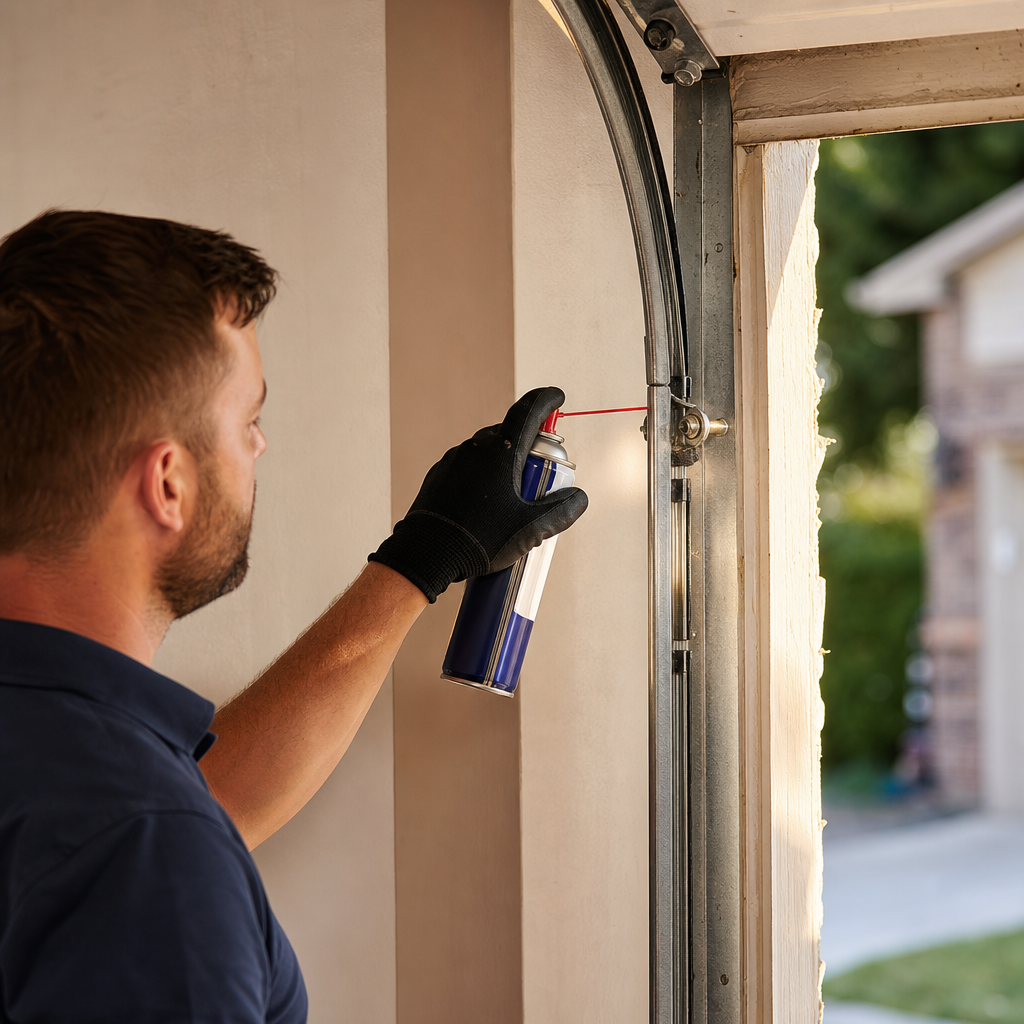
Use a garage-door-appropriate spray lubricant on compatible moving parts according to the owner’s manual.
Applying Lubricant Correctly
- Hinges and Rollers: Apply a garage-door-appropriate spray lubricant to compatible moving parts and pivot points as directed in the owner’s manual.
- Manufacturer Guidelines: Consult the owner’s manual for guidance on whether to lubricate spring assemblies or other hardware components.
4. Auto-Reverse and Photo-Eye Safety Sensor Testing
CPSC material states that qualifying operators manufactured or imported after January 1, 1993, were required to include an external entrapment-protection system, and the IDA checklist recommends testing both contact reversal and photo-eye interruption. In addition, HUD’s NSPIRE standard includes electronic operation and closing of garage doors as inspection elements for covered housing properties.[1]
Executing the Contact and Non-Contact Safety Tests
- Solid-Object Automatic Reversal Test: Place a solid object on the floor in the center of the door path. Activate the door to close. When the bottom edge contacts the object, the door should reverse direction.
- Optical Photo-Eye Sensor Test: Activate the door to close and interrupt the beam between the sensors. The door should stop and reverse.
- Clean and Align: Wipe dust and dirt off the sensor lenses and ensure proper alignment according to manufacturer instructions.
5. Track Cleaning, Alignment, and Debris Removal
Tracks guide the rollers along their path. Keeping channels clear of debris supports smooth operation.
Maintaining Clean Roller Paths
- Clean the Channels: Wipe out dirt, grime, and debris from inside the vertical and horizontal tracks.
- Check Alignment: Inspect the vertical tracks to confirm they are straight and aligned according to manufacturer instructions.
6. Weatherstripping and Bottom Perimeter Seal Inspection
Perimeter weather seals help keep dirt, water, and pests out of your garage.
Checking Perimeter Seals
- Bottom Rubber Seal: Inspect the seal along the bottom edge of the door for cracking, wear, or gaps.
- Side and Top Jamb Seals: Check around the top and side jambs for visible gaps and worn weatherstripping.
7. Opener Drive Mechanism and Fastener Tightening
Regular operation can loosen hardware over time.
Securing Drive Hardware
- Tighten Fasteners: Check and snug up loose nuts and bolts on accessible hinges and brackets without overtightening.
- Inspect Opener Drive: Check the drive chain or belt according to manufacturer guidelines for proper tension.
- Test Opener Battery Backup: If your opener includes a battery backup, test it according to the manufacturer instructions to verify operation during power outages.
Frequently Asked Questions About Garage Door Maintenance
Maintenance Frequency and Safety Guidelines
How often should garage door maintenance be performed?
Basic visual and operational checks may be performed monthly. Additional servicing schedules may depend on manufacturer guidelines not established by this brief.
What type of lubricant is best for garage door parts?
Use a garage-door-appropriate spray lubricant on compatible moving parts according to the owner’s manual. Refer to manufacturer instructions regarding specific components.
How do I know if my garage door springs need service?
Warning signs include unusual noises during movement, visible damage to the springs, a door that feels unbalanced when operated manually, or uneven movement.[5]
Which garage door maintenance tasks require a professional?
Adjusting spring tension, replacing broken torsion or extension springs, repairing lift cables, and servicing bottom roller brackets should be left to a trained technician, such as Superior Garage Door Experts Port Charlotte, due to high-tension hazards.
Need garage door maintenance checklist?
We’re available now — call for a fast, free estimate.
Sources
- A – reginfo.gov (2017)
- Non Reversing Automatic Garage Door Openers Are a Hazard – CPSC – cpsc.gov
- Safety & Maintenance – IDA – International Door Association – doors.org
- Garage Door Health & Safety Checklist – static1.squarespace.com
- How to test the balance of a garage door – support.chamberlaingroup.com
Frequently Asked Questions
Can I use standard WD-40 to lubricate my garage door tracks and rollers?
Standard WD-40 acts as a solvent and degreaser rather than a true lubricant, which can attract dirt and strip essential grease from moving parts. Superior Garage Door Experts Port Charlotte recommends using a dedicated silicone or white lithium spray designed specifically for overhead doors.
How does Florida coastal humidity affect my garage door maintenance schedule?
Salt air and constant humidity accelerate oxidation and rust on metal springs, lift cables, and roller bearings. Homeowners in coastal environments should inspect hardware monthly and schedule an annual safety tune-up with Superior Garage Door Experts Port Charlotte to catch corrosion before parts snap.
What should I do if my garage door falls or shoots up during a balance test?
An unbalanced door indicates that the counterweight springs have lost proper tension or are failing, which strains the opener drive mechanism. Because adjusting high-tension spring assemblies carries severe safety risks, stop using the door manually and contact a licensed technician for immediate service.
About the author
 |
Marcus Henderson Marcus brings over 12 years of hands-on experience in residential and commercial garage door systems to his writing. A former certified technician with the International Door Association (IDA), he uses his deep understanding of garage door mechanics to help homeowners maintain secure and functional properties. He specializes in practical advice on emergency repairs, preventative maintenance, and upgrading home security. |